The painter
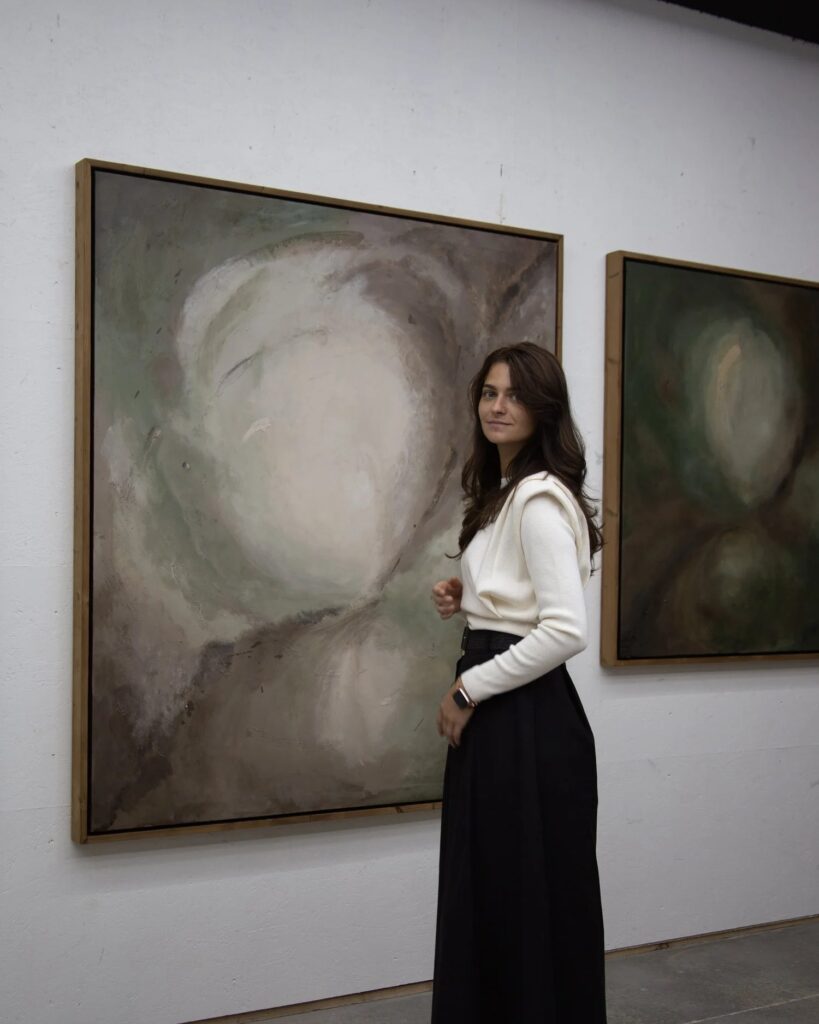
A contemporary artist creating abstract atmospheric paintings inspired by emotion, silence, memory and natural light. She paints and sells from Knokke-Heist, on the Belgian coast.
Her ongoing body of work explores soft transitions between presence and absence, inviting the viewer into contemplative spaces shaped by texture, stillness and light.
The paintings are built in layers — acrylic, gels, sand and modelling paste worked into the canvas until the surface holds depth rather than colour. Seen from across a room they settle; up close they open into relief, grain and mineral texture.
Each work exists once. Nothing is printed, editioned or reproduced. Every piece is framed in cedar and signed on the reverse.
In her own words
01 — Beginnings
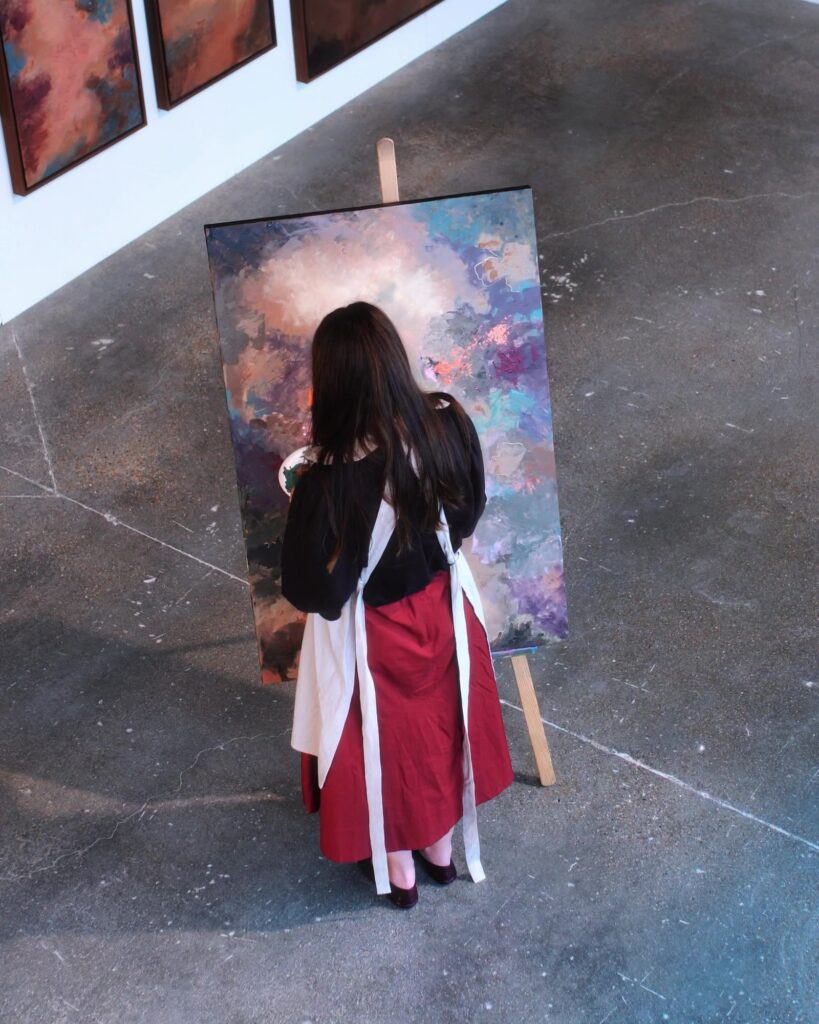
I started painting in 2013, at a time when I had more free time. I bought a few canvases and some acrylics and simply began to experiment. Back then I was also drawing a lot — mostly portraits in pencil. That is when I realised this was something I truly love doing, and that painting brings me calm and fulfilment. My husband’s constant support, and the trust he placed in me every single time, played a big part in that.
I am self-taught. In the beginning I watched a great many tutorials and videos on YouTube, then tried the techniques on my own. Through practice and a lot of experimenting, I gradually found my own way of working and my own direction.
I love to paint. Above all, I want my work to convey calm and peace. I like working alone and in silence, and when I can, I stay in the studio late into the night. Sometimes I listen to music; other times I prefer to hear nothing but the sponge or the brush on the canvas.
I don’t want my paintings to be cold, rigid or sad. Sadness is not something I want to pass on through my work. There may be tension — but it is rather what I would call a quiet tension.
I love watching people in front of my paintings: when they stop, when I see pleasure or curiosity on their faces, and above all when they start telling me what a work says to them. It fascinates me how differently people react — some stop in front of one canvas, while others are drawn to something else entirely.
I don’t necessarily want to tell people what they should see or feel. I like leaving room for their own interpretation.
02 — Style
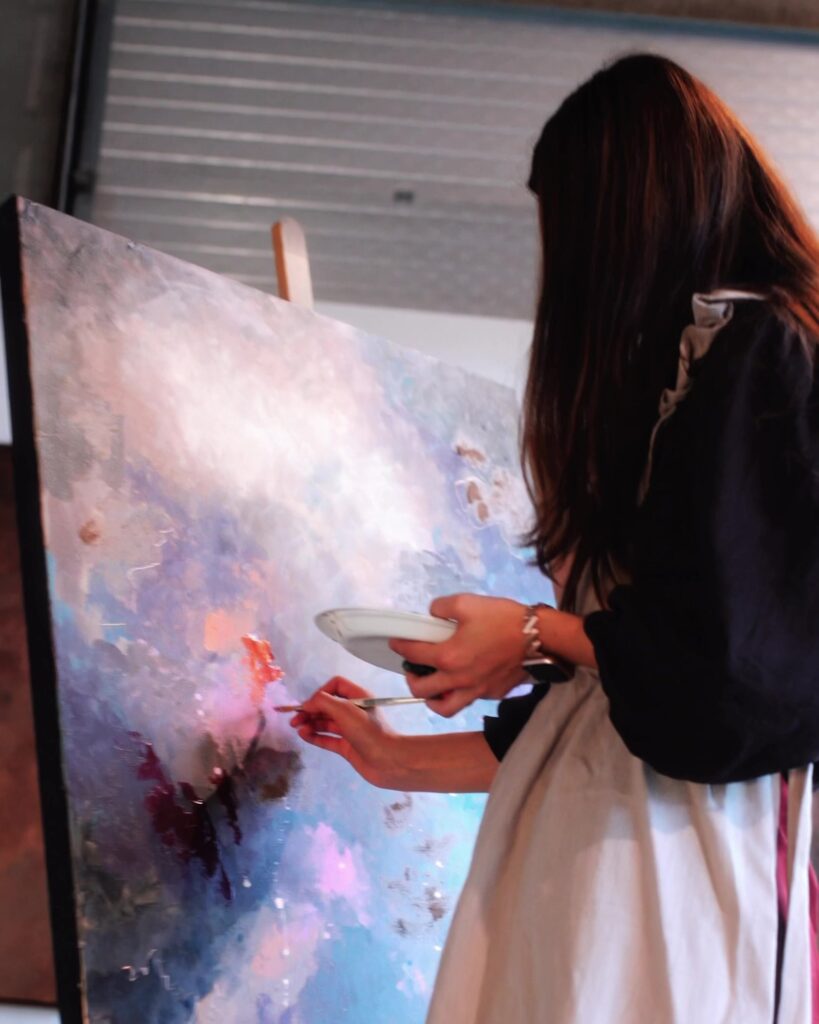
I work mainly in abstraction. Colour is the first thing that catches my attention, followed by light, texture and detail.
Until recently I was drawn above all to earthy, natural colours — I mixed endless shades of beige, brown and green. Gradually I began to bring in other colours: first peach, then bronze, which I love, and more recently even purple, pink and petrol blue.
I am very fond of neutral tones, but lately I have been trying to step out of my comfort zone and explore a more colourful side. I think that reflects who I am as a person, too: I love neutrals, but there are moments when I really love colour.
I want to stay in abstraction, without limiting myself to a single palette.
03 — Process
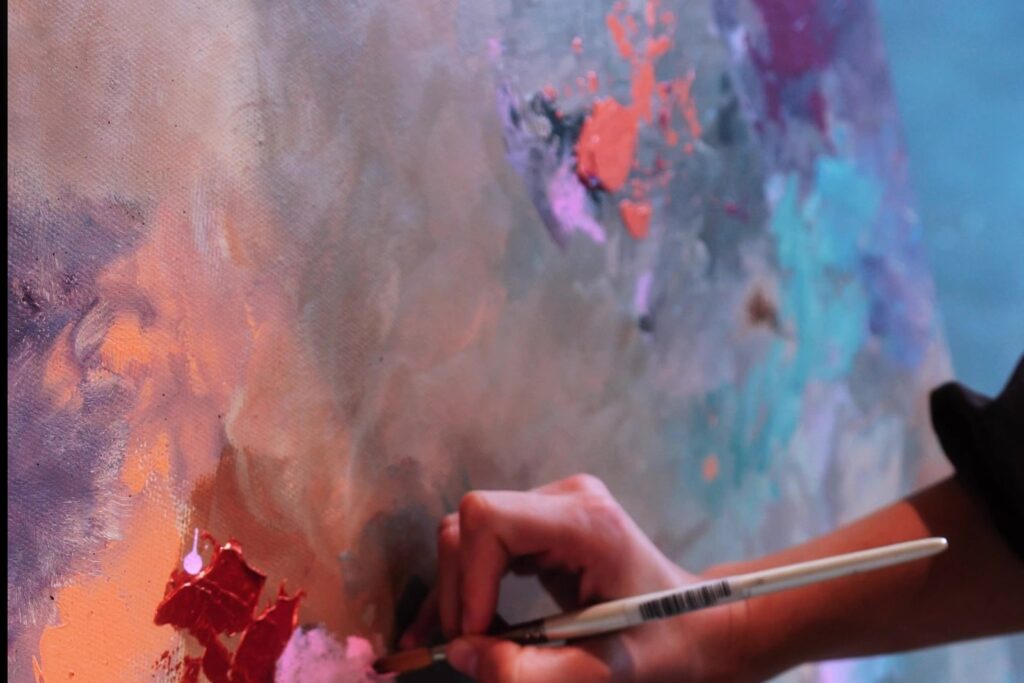
It usually all begins with colour. I don’t start from a fixed combination — I mix my colours, and the process starts from there.
I don’t have an exact picture in my mind of how the finished work should look. Even when I start with an idea, it almost always changes along the way.
A blank canvas brings two feelings at once: the excitement of creating something new, and the fear of the unknown.
The hardest part often comes halfway through. There are moments when it feels like nothing is working, or that the painting isn’t going where I want it to. But I don’t give up. I keep going — I change things, paint over them and rework them if I feel it is needed.
I usually work in many layers. Even if an area took me a long time, or I love it, I would rather cover it and start again if it no longer works within the whole. Letting go of a successful passage isn’t always easy, but I do it when the painting asks for it.
As I get close to the end, the mood shifts. Pleasure, confidence and satisfaction set in. Sometimes I go to the studio just to look at the painting again.
For me, a work is finished when I look at it and feel harmony.
04 — Texture
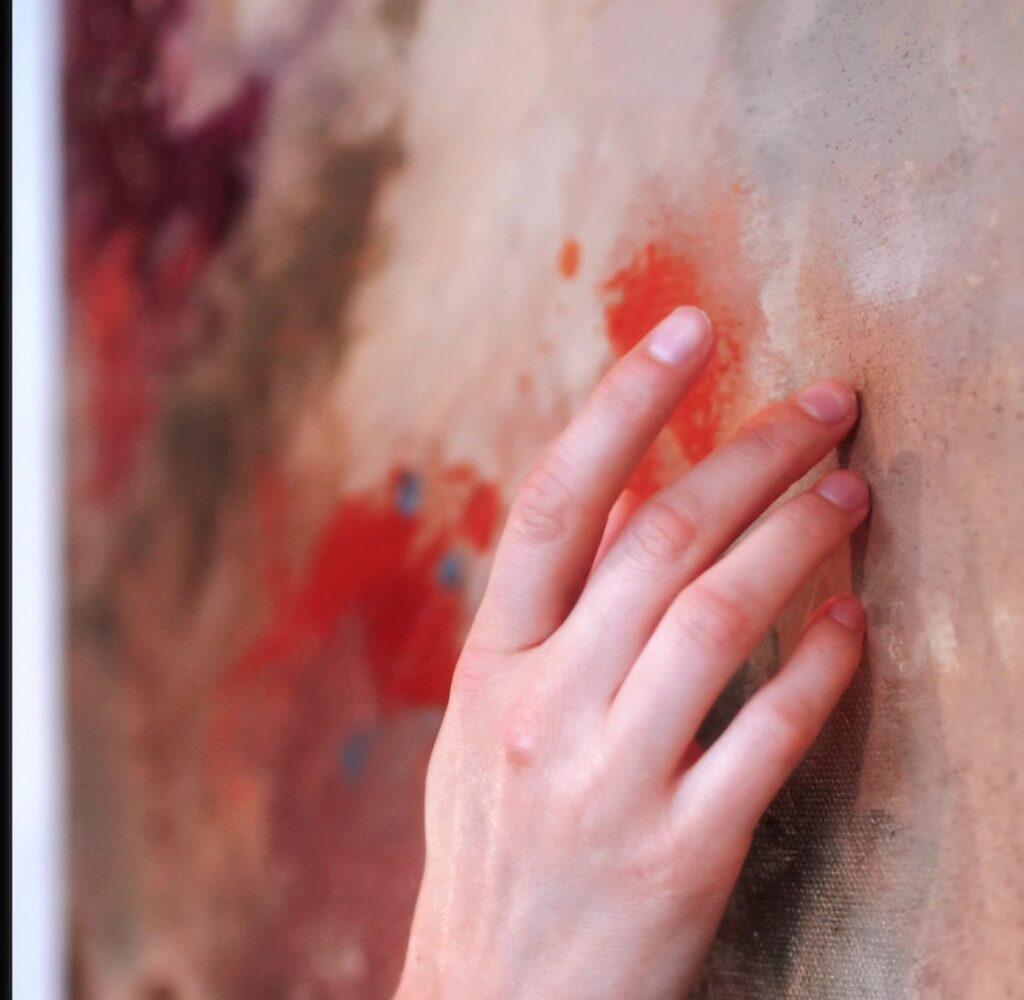
Texture matters a great deal to me — visually as much as to the touch. I like to get close to a work and touch it, to feel the surface and the differences between materials and layers.
I love details, not only in painting but in general. I love uniqueness, and I wanted my work to carry an element that is mine alone. So before a painting is finished, I add a small detail for the viewer to discover — a stitched pebble, or a small stitch worked into the canvas. I like the idea that it makes people curious, draws them closer, and perhaps keeps them beside the work a little longer.
I prefer to work on large canvases. I have often been asked why I choose such big formats. I think the answer is very simple: I love space and air. I don’t like small spaces. On a large canvas I feel much freer, as if I have room to build the work without constraints.
05 — Materials
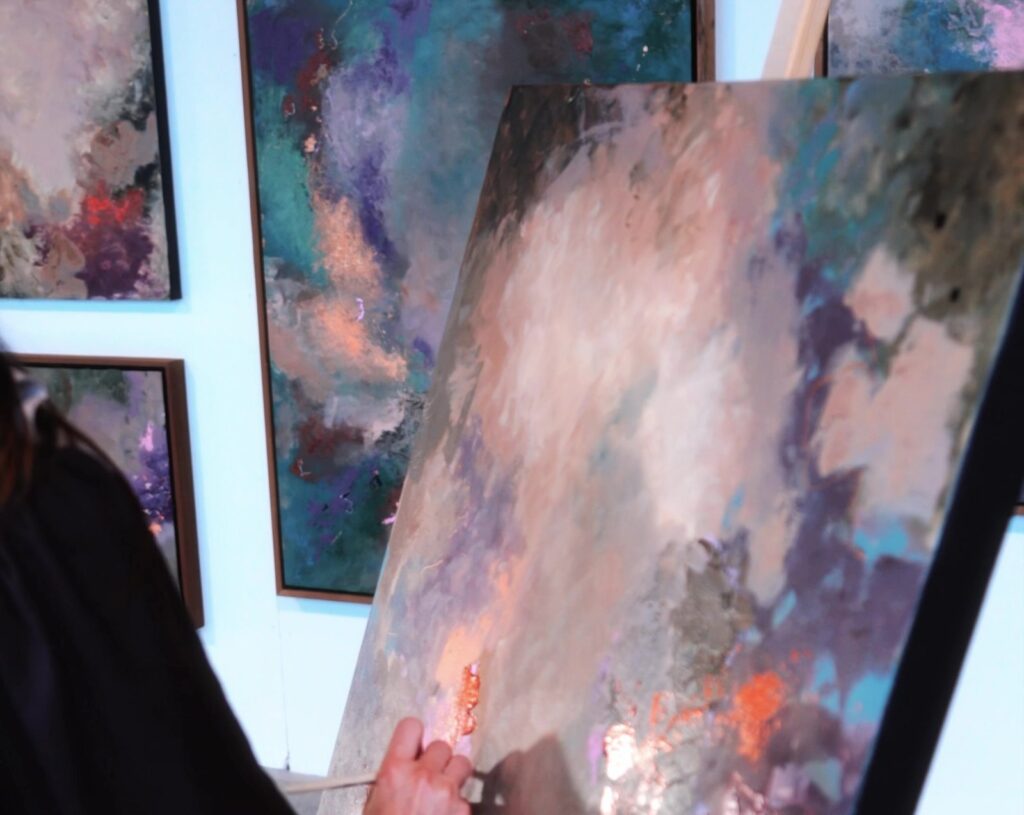
I work mainly on cotton-linen blend canvas. I paint in acrylic and like to experiment with different materials and surfaces: matte and gloss gels, sand, modelling paste and other materials that help me build texture.
There is no single tool I have to use. I love working with a sponge, but I also use brushes, cloths — and sometimes even my hands, if the work calls for it. The process is intuitive and built up in many layers: I add, cover, change and rebuild until the painting reaches the balance I am looking for. At the end, every work is protected with a matte varnish.
The stretchers are made in our own workshop. They are built from two layers of wood glued together, for stability and to reduce the risk of warping over time — which matters all the more because I often work on large formats.
Both the stretchers and the frames are handmade by my husband, who has more than ten years of experience in woodworking and also makes them for other artists. Everything is built around what I want for each individual work.
The frames are made of cedar. I chose it for its refined, elegant look, and because it is a light wood. Having everything made in our own workshop lets me choose the proportions and finishes for each painting, and keep control over the whole object — not just the painted surface.
06 — Recognition
My first exhibition was ArtistMeeting, at the Belfort in Bruges. There, my work Ember Silence received an award from one of the event’s experts, Elias Willem.
Raluca Luchian
Screens flatten layered acrylic and texture. The studio in Knokke-Heist is open by appointment, and a video of any canvas can be sent the same day.